Do Hedgehogs Have Claws? Everything You Need to Know
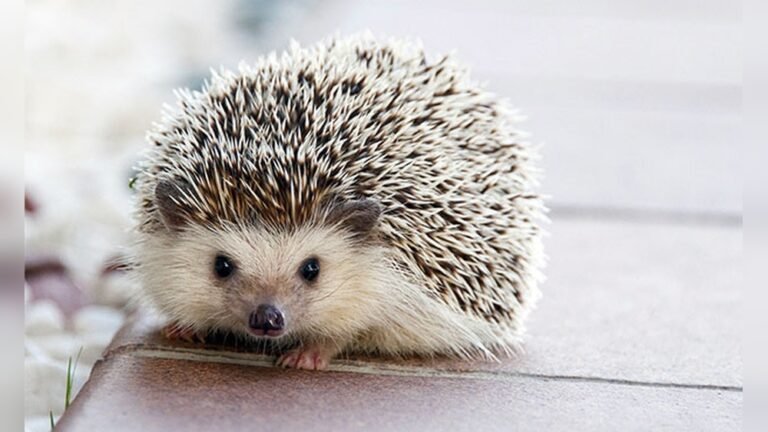
Yes, hedgehogs do have claws. If you have ever seen a Hedgehog moving across the ground, digging into soil, or slowly exploring at night, those small sharp feet are doing a lot more work than most people realize.
These tiny claws help hedgehogs dig burrows, search for food, climb small obstacles, and move through rough terrain. Without them, their natural behaviors would be very limited. This is true for both wild hedgehogs and pet hedgehogs.
In this article, we will break down everything about hedgehog claws in a simple way. You will learn what they look like, why they matter, how they grow, and whether they need care in captivity.
What Does Claw Mean?

A claw is a hard, curved, pointed nail found on the toes of many animals. Claws are made of a strong protein called keratin, the same material found in human nails and hair.
They are designed to help animals grip, dig, climb, catch food, and defend themselves.
In animals like the Hedgehog, claws play an important role in digging soil and moving through rough ground. In birds, claws are called talons and are used for hunting. In cats and dogs, claws help with movement, balance, and protection.
What Do Hedgehog Claws Look Like?
The claws of the Hedgehog are small, curved, and sharp, but not as extreme as predator animals. They look like short, pointed nails that extend from each toe. Even though they are small in size, they are strong enough to dig into soil and grip rough surfaces easily.
These claws are usually light in color, often pale white, ivory, or slightly yellow depending on the hedgehog’s age and environment. In some cases, they may appear darker if exposed to dirt or natural wear. Each claw grows in a curved shape, which helps the hedgehog hook into the ground while digging or moving through loose soil.
Front claws are typically more noticeable than back claws because they are slightly longer and thicker. This is due to their heavy use in digging and foraging. The back claws are shorter and less curved, mainly supporting movement and balance.
Hedgehog Claw and Foot Anatomy
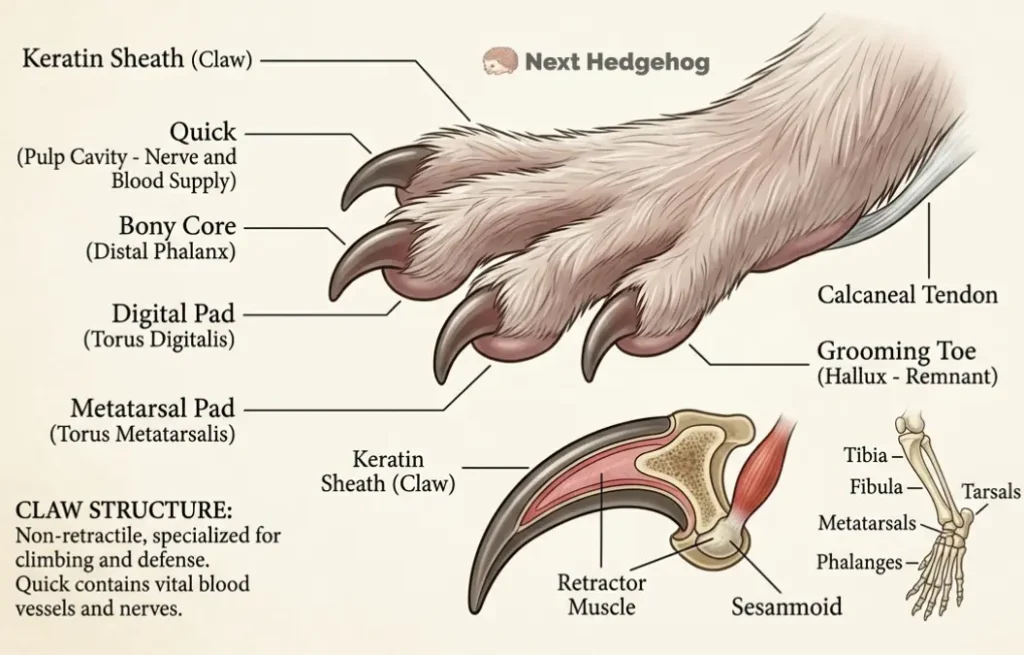
The foot and claw anatomy of the Hedgehog is specially designed for survival in the wild. Each foot has five toes, and every toe ends with a hard, curved claw made of keratin. These claws are not just for appearance. They work as natural tools that help the hedgehog dig into soil, move through leaves, and grip uneven ground.
The front feet are stronger and more muscular compared to the back feet. This is because hedgehogs use their front claws mainly for digging burrows and searching for insects in the soil. The back feet, on the other hand, are more focused on support and balance. They help the hedgehog push forward and move steadily while walking or running.
Inside the feet, small bones and flexible joints support every claw movement. This gives hedgehogs good control when digging or scratching the ground. The combination of strong claws, thick skin on the feet, and flexible joints makes their anatomy very efficient for a ground-dwelling, nocturnal lifestyle.
Why Hedgehogs Need Claws?
The Hedgehog relies on its claws for survival in many ways. These small but strong tools are essential for digging, moving, finding food, and staying safe in the wild. Without claws, a hedgehog would struggle to perform its natural daily activities.
- Digging Burrows: Hedgehogs use their claws to dig underground shelters where they sleep and hide from predators and harsh weather.
- Finding Food: They scratch and dig into soil to uncover insects, worms, and other small food sources.
- Movement and Grip: Claws help them maintain balance and traction while walking over rough ground, roots, and uneven surfaces.
- Defense and Protection: When threatened, hedgehogs can use their claws to push against predators while curling into a protective ball.
- Nest Building: Claws help them gather and arrange leaves, grass, and other materials to build comfortable nests.
Read Also: Do Hedgehogs Have Whiskers
Do Hedgehog Claws Grow Too Long?
The Hedgehog has claws that grow continuously throughout its life. In the wild, natural movement and digging help keep them worn down. But in captivity, claws can become too long if they are not naturally filed or trimmed. Overgrown claws can affect walking, digging, and overall comfort.
Below is a simple breakdown of claw growth and size based on age.
| Age Stage | Claw Size & Growth Level | Natural Condition | Risk of Overgrowth |
|---|---|---|---|
| Baby (0–2 months) | Very small, soft, less curved claws | Naturally short and delicate | Very low |
| Juvenile (2–6 months) | Growing fast, becoming sharper | Still naturally managed through activity | Low |
| Young Adult (6 months–2 years) | Fully developed, strong and curved | Normal wear if active | Moderate in captivity |
| Adult (2–4 years) | Thick, firm claws, steady growth | Needs regular wear or trimming | High in captivity |
| Older Hedgehog (4+ years) | Slower growth but thicker claws | Less activity leads to poor natural wear | High |
How Hedgehogs Use Their Claws in Daily Life
The Hedgehog depends on its claws throughout the day and night for survival tasks. These claws are multifunctional tools that support digging, movement, feeding, and shelter building.
Every activity in a hedgehog’s life involves careful use of its claws, especially during its active nighttime hours.
Food Searching and Digging Behavior
Hedgehogs use their claws to dig into soil, leaf litter, and soft ground to find insects, worms, and other small prey. They scratch repeatedly to loosen the surface and uncover hidden food.
This digging behavior is one of their most important survival skills and helps them access food that is not visible on the surface.
Walking and Ground Navigation
Claws help hedgehogs move steadily across uneven terrain. Whether they are walking on grass, dirt, or rocky surfaces, their claws provide grip and stability. This reduces slipping and helps them travel safely while exploring large areas during the night.
Burrow Maintenance and Shelter Use
Hedgehogs use their claws to dig, expand, and maintain their burrows. These underground shelters protect them from predators and extreme weather. Claws help them adjust the shape of tunnels and keep their resting places secure and comfortable.
Nest Building and Material Gathering
Claws are used to collect leaves, grass, and other soft materials for nesting. Hedgehogs drag and arrange these materials to create warm sleeping areas. This nesting behavior helps them stay insulated and safe while resting during the day.
Self-Protection and Defensive Use
Although hedgehogs mainly rely on their spines, their claws also play a small role in defense. When threatened, they may scratch or push against predators while curling into a ball. This adds an extra layer of protection in dangerous situations.
Hedgehog Claws vs Other Small Mammals
The Hedgehog has claws that are specially adapted for digging and ground movement. However, different small mammals have very different claw structures depending on their lifestyle.
Some are built for climbing, some for digging, and others for hunting. Comparing them helps us understand how unique hedgehog claws really are.
| Animal | Claw Shape | Main Use | Strength Level | Special Adaptation |
|---|---|---|---|---|
| Hedgehog | Short, curved, strong | Digging, foraging, burrow building | Medium to strong | Designed for soil digging and ground movement |
| Mouse | Thin, small, sharp | Climbing and scratching surfaces | Low to medium | Lightweight claws for fast movement |
| Squirrel | Sharp, curved, gripping | Tree climbing and jumping | Strong grip | Adapted for arboreal life |
| Rabbit | Straight, short claws | Digging shallow burrows | Medium | Built for quick digging and running |
| Mole | Large, spade-like claws | Deep underground tunneling | Very strong | Specialized for intensive digging underground |
Do Hedgehog Claws Hurt Humans?
The Hedgehog has small but sharp claws that can sometimes scratch human skin. However, they are not designed to cause serious harm. These claws are mainly built for digging and movement, not for attacking or defense like in predators.
So in most normal situations, hedgehog claws cause only mild discomfort if they come into contact with skin.
When a hedgehog is handled roughly or feels scared, it may try to push or scratch with its feet while curling into a ball. This can lead to light scratches, especially if the claws are long or not trimmed in pet hedgehogs.
The scratches are usually minor and similar to small fingernail marks. Proper handling and calm behavior from the hedgehog greatly reduce any chance of injury.
How to Safely Trim Hedgehog Claws
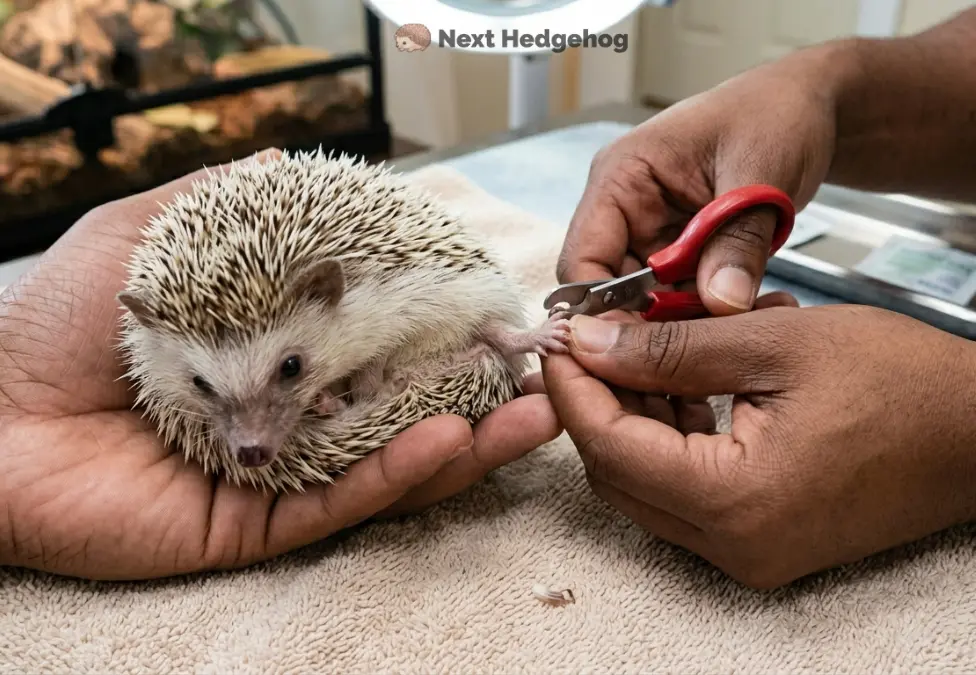
The Hedgehog needs regular claw care in captivity because natural digging may not wear them down enough. Overgrown claws can cause discomfort, walking issues, and even injury. Trimming them safely is important, but it must be done carefully to avoid stress or harm.
- Choose a Calm Environment: Pick a quiet place with good lighting where the hedgehog feels safe and relaxed.
- Use Proper Tools: Small animal nail clippers or human nail clippers with a precise edge work best for trimming hedgehog claws.
- Hold the Hedgehog Gently: Support its body carefully, keeping it secure but not tightly squeezed to reduce stress.
- Identify the Quick: Look closely at the claw and avoid cutting into the pink area inside, which contains blood vessels.
- Trim Only the Tip: Cut small portions of the claw to avoid injury and reduce the risk of bleeding.
- Take Breaks if Needed: If the hedgehog becomes stressed, pause and continue later instead of forcing the process.
- Reward After Trimming: Offer a treat or gentle handling afterward to help the hedgehog stay calm during future trims.
Myths and Misconceptions About Hedgehog Claws
The Hedgehog often gets misunderstood because people focus more on its spines than its feet. This leads to several myths about its claws, how they work, and what they are used for.
In reality, hedgehog claws are simple but highly functional tools designed for survival, not for harm or special abilities.
- Hedgehog claws are not poisonous or harmful in any special way, they are just hardened nails used for digging and movement.
- Claws are often confused with spines, but they are completely different body parts with different functions.
- Many people think hedgehogs use claws to attack, but they mainly use them for digging, walking, and building shelter.
- It is a myth that wild hedgehogs do not need claw care, because in nature their activity naturally keeps claws worn down.
- Some believe hedgehog claws are fragile, but they are actually strong enough to dig through soil and rough ground.
- Another misconception is that claws grow only when needed, but in reality they grow continuously throughout their life.
FAQs and Answers
Here are some common questions about the Hedgehog claws and simple answers to help clear confusion.
Do hedgehogs have claws or nails?
Hedgehogs have claws, not flat nails. These claws are curved and strong, designed for digging and movement.
How many claws does a hedgehog have?
Most hedgehogs have five toes on each foot, and each toe has one claw, making a total of 20 claws.
Are hedgehog claws dangerous?
No, they are not dangerous. They may cause small scratches, but they are not strong enough to cause serious injury.
Do hedgehog claws grow continuously?
Yes, their claws keep growing throughout their life and naturally wear down through digging and movement in the wild.
Do pet hedgehogs need claw trimming?
Yes, pet hedgehogs often need regular trimming because they may not naturally wear down their claws enough indoors.