Can Hedgehogs See in the Dark? (Shocking Truth Exposed)
Yes, hedgehogs can see in the dark, but not in complete darkness. Their eyesight is adapted for low light conditions, which helps them stay active at night.
However, they rely much more on their powerful sense of smell, sharp hearing, and touch to find food and navigate their surroundings.
If you have ever watched a hedgehog explore after sunset, you may wonder how it moves around so confidently.
These small nocturnal animals seem comfortable in dim environments, leading many people to believe they have exceptional night vision. The truth is a little more interesting.
Hedgehogs have evolved to be active when most predators and competitors are less active. While their vision helps them detect movement and navigate in low light, it is only one part of a highly developed survival system.
Can Hedgehogs Really See in the Dark?
Yes, hedgehogs can see in the dark, but their vision is not as powerful as many people think. They are adapted to see in low light conditions rather than complete darkness.
This ability helps them stay active at night when they search for food, explore their surroundings, and avoid danger.

As nocturnal animals, hedgehogs spend most of their active hours after sunset. Their eyes are designed to gather more light than the eyes of many daytime animals. This allows them to detect shapes, movement, and obstacles in dim environments.
What makes hedgehogs successful at night is not their eyesight alone. In fact, their sense of smell and hearing are far more important.
How Good Is a Hedgehog’s Eyesight?
A hedgehog’s eyesight is generally considered poor compared to many other mammals. While hedgehogs can see well enough to move around and recognize changes in their environment, vision is not their strongest sense. They depend much more on smell and hearing to understand the world around them.
Hedgehogs are naturally adapted for life at night. Their eyes help them detect light, shadows, and movement in low light conditions, but they do not see fine details very well. This means a hedgehog may notice that something is nearby without clearly identifying what it is.
Scientists believe hedgehogs are somewhat nearsighted, making it easier for them to focus on objects that are close rather than far away. This is useful because they spend much of their time searching the ground for insects, worms, and other food sources.
Color vision in hedgehogs is also limited. They are thought to see fewer colors than humans and rely more on contrast and movement when exploring their surroundings. Because of this, scent and sound often provide more valuable information than visual cues.
How Hedgehog Vision Works at Night
Hedgehogs are most active after sunset, so their eyes have evolved to function better in dim lighting than in bright daylight.
While they are not true night vision experts like owls or cats, they can still see enough to move around, find food, and stay aware of their surroundings during the night.
Their Eyes Are Adapted for Low Light Conditions
Hedgehog eyes are designed to collect as much available light as possible. This adaptation helps them detect objects and movement in dim environments where daytime animals may struggle to see. Because they are naturally nocturnal, they do not require bright light to perform their nightly activities.
Instead of focusing on fine details, hedgehogs use their vision to recognize general shapes, pathways, and potential obstacles. This level of visual awareness is usually enough for their nighttime lifestyle.
They Detect Movement Better Than Fine Details
One important feature of hedgehog vision is the ability to notice movement. Detecting motion helps them identify potential threats and locate insects or other food sources. However, they are not known for having sharp or highly detailed eyesight.
A moving object is often easier for a hedgehog to notice than a stationary one. This trait is common among many nocturnal animals that prioritize survival and awareness over detailed visual perception.
They Cannot See in Complete Darkness
Many people assume hedgehogs can see perfectly in total darkness, but this is a myth. Like most animals, hedgehogs still need some level of light to see. In complete darkness, where no light is present, their vision becomes much less useful.
When visibility is extremely low, they rely more heavily on their other senses. Their strong sense of smell and excellent hearing help them continue exploring even when their eyes provide limited information.
Their Sense of Smell Plays a Bigger Role Than Vision
A hedgehog’s nose is one of its most powerful tools. They use scent to locate food, recognize familiar environments, and investigate new objects. In many situations, smell provides more information than eyesight.
This is why hedgehogs often sniff continuously while exploring. Their brains are highly adapted to process scent information, allowing them to navigate effectively even in near darkness.
Hearing Helps Them Stay Alert at Night
Hedgehogs also depend heavily on hearing. Their sensitive ears can detect subtle sounds that may indicate food, predators, or other animals nearby. This auditory awareness compensates for the limitations of their eyesight.
By combining hearing with smell and vision, hedgehogs create a detailed understanding of their environment without needing exceptional visual abilities.
Multiple Senses Work Together for Night Navigation
Rather than relying on one sense alone, hedgehogs use a combination of vision, smell, hearing, and touch. Their whiskers help them detect nearby objects, while their nose and ears gather information from farther away.
This multisensory approach is the real secret behind their nighttime success. Although their eyesight is only moderate, the teamwork between all of their senses allows hedgehogs to thrive in low light environments and remain active throughout the night.
Do Hedgehogs Have Poor Daytime Vision?
Yes, hedgehogs generally have poor daytime vision compared to many animals that are active during the day.
Their eyes evolved to support a nocturnal lifestyle, meaning they are better suited for low light environments than bright daylight conditions. As a result, they do not rely heavily on vision when the sun is out.
During the day, a hedgehog can still see and move around, but its eyesight is not particularly sharp. Fine details, distant objects, and subtle visual differences may be difficult for it to recognize. This is one reason hedgehogs depend more on their sense of smell and hearing than on their eyes.
Bright light can also be uncomfortable for hedgehogs. Since they naturally spend daylight hours resting in nests, burrows, or other sheltered locations, they are not adapted to prolonged exposure to strong sunlight.
What Colors Can Hedgehogs See?

Hedgehogs do not see colors as vividly as humans. Their eyes are adapted for low-light environments, so they rely more on brightness and contrast than on color recognition.
While research is limited, scientists believe hedgehogs can perceive some colors better than others.
- Blue: Likely one of the easiest colors for hedgehogs to see and distinguish.
- Green: May be visible and easier to recognize than warmer colors such as red or orange.
- Yellow: Can probably be detected, although it may not appear as bright as it does to humans.
- White: Easy to notice because it reflects more light and creates strong contrast.
- Gray: Different shades of gray are important for navigating in low-light conditions.
- Black: Visible mainly through contrast with lighter objects and backgrounds.
- Red: Likely difficult to distinguish and may appear as a darker shade.
- Orange: May look dull or blend with other similar shades.
- Pink: Probably appears less vibrant and may resemble light gray tones.
- Purple: Can be difficult to differentiate and may look similar to blue or dark gray.
Why Hedgehogs Are Active at Night
Hedgehogs are nocturnal animals, which means they naturally sleep during the day and become active after sunset. This behavior has developed over thousands of years and helps them find food, avoid predators, and survive in their natural habitats.
While many people associate hedgehogs with darkness, their nighttime activity is actually the result of several evolutionary advantages.
Natural Nocturnal Behavior
Hedgehogs are biologically programmed to be active at night. Their internal body clock, known as the circadian rhythm, tells them when to sleep and when to wake up.
This natural schedule allows them to carry out important activities when temperatures are cooler and conditions are safer.
Even pet hedgehogs usually follow this pattern, often sleeping throughout the day and becoming energetic in the evening.
Evolutionary Advantages of Being Active After Dark
Being active at night gives hedgehogs several survival benefits. During daylight hours, many predators are more active and visibility is higher, making it easier for threats to spot them. By moving around after sunset, hedgehogs reduce their chances of being detected.
Nighttime activity also helps them conserve energy. Cooler temperatures reduce the risk of overheating while they travel long distances in search of insects, worms, and other food sources. Over time, natural selection favored hedgehogs that were better adapted to nighttime living.
Predator Avoidance and Survival
One of the biggest reasons hedgehogs are active at night is protection from predators. Although their spines provide a strong defense, avoiding danger altogether is often the safer option.
Under the cover of darkness, hedgehogs are less visible to many predators. They can quietly move through grass, leaves, and bushes while using their sharp hearing and excellent sense of smell to stay alert.
If a threat approaches, a hedgehog can quickly curl into a tight ball and use its spines as protection.
What Helps Hedgehogs Navigate in the Dark?
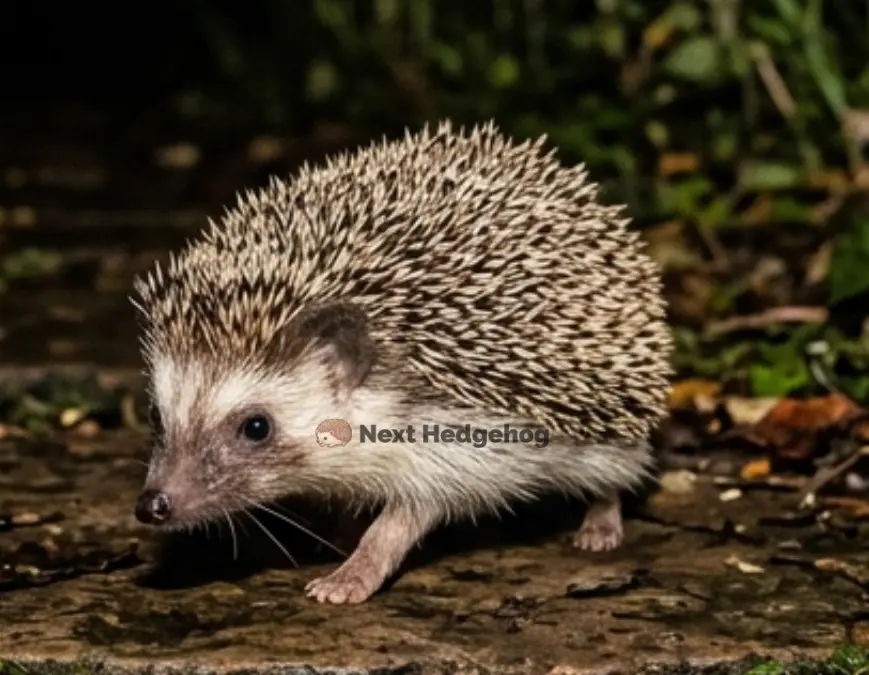
Hedgehogs are surprisingly effective at moving around in the dark, but their success does not come from exceptional eyesight alone. Instead, they rely on a combination of senses that help them understand their surroundings, locate food, and avoid danger.
Each sense plays a unique role, allowing hedgehogs to remain active and confident during nighttime hours.
The Role of Their Sense of Smell
A hedgehog’s sense of smell is its most important navigation tool. Their noses are highly sensitive and can detect scents from food, other animals, and familiar locations. While exploring, hedgehogs constantly sniff their surroundings to gather information that their eyes may miss.
This powerful sense helps them locate insects, worms, and other food sources hidden beneath leaves, grass, or soil. It also allows them to recognize familiar paths and identify potential threats nearby.
How Their Hearing Compensates for Poor Vision
Hedgehogs have excellent hearing that helps them stay aware of their environment, especially at night. Their ears can detect subtle sounds that humans may not notice, including the movement of insects or approaching predators.
When visibility is limited, hearing becomes an important source of information. By listening carefully to their surroundings, hedgehogs can react quickly to danger and locate food more efficiently.
Using Whiskers and Touch for Navigation
Like many nocturnal animals, hedgehogs use their whiskers to help explore the world around them. These sensitive hairs detect nearby objects and changes in the environment before physical contact occurs.
Their sense of touch also helps them navigate through dense vegetation, narrow spaces, and unfamiliar terrain. Together, whiskers and touch provide valuable information that complements their vision and hearing.
How Hedgehogs Find Food at Night
Finding food in darkness requires more than good eyesight. Hedgehogs primarily use smell and hearing to locate insects, worms, slugs, and other prey. Once they detect a scent or sound, they investigate the area more closely.
Their low-light vision helps them avoid obstacles and recognize movement, but the actual search for food depends largely on their other senses. This combination of smell, hearing, touch, and vision makes hedgehogs highly effective nighttime foragers.
How Multiple Senses Work Together
No single sense is responsible for a hedgehog’s ability to navigate in the dark. Instead, they combine information from their eyes, ears, nose, whiskers, and sense of touch to build a complete picture of their surroundings.
This multisensory approach allows hedgehogs to move confidently through low-light environments where many other animals would struggle. It is the reason they can thrive at night despite having relatively poor eyesight.
Do Hedgehogs Need Light at Night?
No, hedgehogs do not need bright light at night. As naturally nocturnal animals, they are adapted to be active in low-light conditions and are most comfortable when their environment is dim.
Although hedgehogs can function in low light, they do not require complete darkness either. A small amount of natural or ambient light is usually enough for them to navigate their surroundings.
Their low-light vision, combined with their excellent sense of smell and hearing, allows them to move around effectively without the need for bright illumination.
How Hedgehog Eyes Are Adapted for Night Activity
Hedgehogs are naturally active after sunset, so their eyes have evolved to function better in dim conditions than in bright daylight. While their eyesight is not exceptionally sharp, several features help them gather available light and remain aware of their surroundings during nighttime activities.
These adaptations work alongside their strong sense of smell and hearing to support life as a nocturnal animal.
- Large Pupils: Hedgehog pupils can allow more light to enter the eyes, helping them see better in low-light environments.
- Light-Sensitive Retinas: Their retinas are adapted to capture available light efficiently, improving visibility during nighttime hours.
- Higher Rod Cell Concentration: Rod cells are responsible for detecting light and movement. Hedgehogs have more rod cells than cone cells, making their eyes better suited for darkness than color recognition.
- Enhanced Motion Detection: Their vision is more effective at noticing movement than fine details, helping them detect predators, prey, and obstacles.
- Reduced Dependence on Color Vision: Since hedgehogs are active at night, distinguishing colors is less important than recognizing shapes, shadows, and contrast.
- Improved Low-Light Performance: Their eyes perform best in dim conditions such as moonlight, twilight, or lightly illuminated environments.
- Wide Environmental Awareness: Hedgehogs can detect changes in light and movement around them, helping them stay alert while exploring.
- Adaptation to Nocturnal Living: Their overall eye structure is designed to support nighttime activity rather than daytime hunting or detailed visual tasks.
- Reliance on Multiple Senses: Even with night-adapted eyes, hedgehogs combine vision with smell, hearing, and touch to navigate effectively in the dark.
- Energy-Efficient Visual System: Rather than developing extremely powerful eyesight, hedgehogs evolved a balanced sensory system that allows them to survive successfully in low-light habitats.
Signs Your Hedgehog May Have Vision Problems
Hedgehogs naturally have weaker eyesight than many other animals, which can make it difficult for owners to recognize vision problems.
However, noticeable changes in behavior, movement, or eye appearance may indicate that a hedgehog is experiencing difficulty seeing. Identifying these signs early can help prevent injuries and ensure your pet receives proper veterinary care.
- Frequently Bumping Into Objects: Repeatedly running into cage accessories, walls, food bowls, or toys may indicate reduced vision.
- Difficulty Finding Food or Water: A hedgehog that struggles to locate its food dish or water source could be experiencing eyesight issues.
- Increased Startle Responses: Becoming unusually startled when approached may suggest the hedgehog cannot see movement clearly.
- Reluctance to Explore: A normally curious hedgehog that suddenly avoids exploring new areas may be having trouble navigating.
- Moving More Slowly Than Usual: Hesitant or cautious movement can be a sign that the hedgehog is unable to see obstacles clearly.
- Squinting or Keeping Eyes Partially Closed: Frequent squinting may indicate discomfort, irritation, or an underlying eye condition.
- Cloudy or Hazy Eyes: A cloudy appearance can be a symptom of cataracts or other eye disorders.
- Redness Around the Eyes: Eye inflammation, irritation, or infection may affect vision and should be evaluated by a veterinarian.
- Excessive Eye Discharge: Unusual tearing, crusting, or discharge can signal an eye infection or injury.
- Difficulty Following Movement: A hedgehog that does not react to nearby movement may have reduced visual ability.
- Changes in Nighttime Activity: Since hedgehogs are nocturnal, a noticeable decline in nighttime confidence or activity levels may suggest vision problems.
- Eye Swelling or Injury: Any visible swelling, scratches, or trauma around the eyes should be addressed immediately.