Are Hedgehogs Nocturnal? Interesting Facts Explained!
Yes hedgehogs are nocturnal animals. They stay active during the night and sleep for most of the day.
When the sun goes down a hedgehog begins its real life. It slowly wakes up and starts exploring its surroundings. It searches for food like insects worms and small invertebrates. The darkness gives it comfort and safety from predators. This is when it feels most natural and alert.
During daylight hours hedgehogs usually hide in nests or burrows. They curl up tightly and rest for long periods. Their bodies are designed for this cycle of night activity and day sleep. Even in captivity this natural rhythm often remains strong.
Understanding this nocturnal behavior is important for anyone interested in hedgehogs. It explains how they survive in the wild and how they should be cared for as pets.
What Does Nocturnal Mean?
Nocturnal means being active during the night and resting during the day.
Animals that are nocturnal sleep through most daylight hours. They come out after sunset when it is dark and quiet. This behavior helps them avoid predators and heat. It also gives them better chances to find food in safer conditions.

For hedgehogs nocturnal living is a natural survival strategy. Their bodies and senses are adapted to low light environments. Understanding this helps explain why they behave so differently from humans and many other animals.
Signs Natural Behavior of Hedgehogs
Hedgehogs have a simple but very instinct driven way of living. Their behavior is shaped by survival needs like food safety and shelter. Most of what they do follows a natural rhythm that is easy to observe once you understand their patterns.
- They become active after sunset and move around in search of food
- They spend most of the daytime sleeping in hidden nests or burrows
- They prefer quiet and dark environments for comfort and safety
- They often curl into a tight ball when they feel threatened
- They use their sense of smell and hearing more than vision
- They travel long distances at night while foraging for insects and worms
- They show solitary behavior and usually avoid other hedgehogs
- They create regular paths or routes during their nightly movements
- They may change activity levels based on weather and temperature
- They repeat daily routines that follow a stable night and day cycle
Why Hedgehogs Are Nocturnal Animals?
Hedgehogs are nocturnal animals because their bodies and instincts are best suited for life in the dark. This night active lifestyle helps them survive more easily by improving safety, food access, and comfort in their environment. Over time, this pattern has become a natural part of their behavior.
- Protection from predators at night: Hedgehogs are safer during nighttime because many predators are less active or have reduced hunting success in the dark. This gives hedgehogs a better chance to move and feed without being easily spotted or attacked.
- Cooler nighttime temperatures: Nighttime offers lower temperatures which helps hedgehogs avoid overheating. This makes it easier for them to travel longer distances while searching for food.
- Easier access to food sources: Many insects and worms become more active at night, making them easier for hedgehogs to hunt. This improves their feeding success without needing to expend too much energy.
- Better use of senses in the dark: Hedgehogs rely heavily on smell and hearing which work very well at night. These senses help them find food and stay aware of danger even when visibility is low.
- Reduced competition from other animals: Fewer animals are active at night, so hedgehogs face less competition for food. This allows them to forage more efficiently and with less stress.
- Natural biological rhythm: Hedgehogs have an internal body clock that makes them naturally active at night and sleepy during the day. This rhythm is consistent in both wild and domestic hedgehogs.
Hedgehog Activity Patterns: Day vs Night Behavior
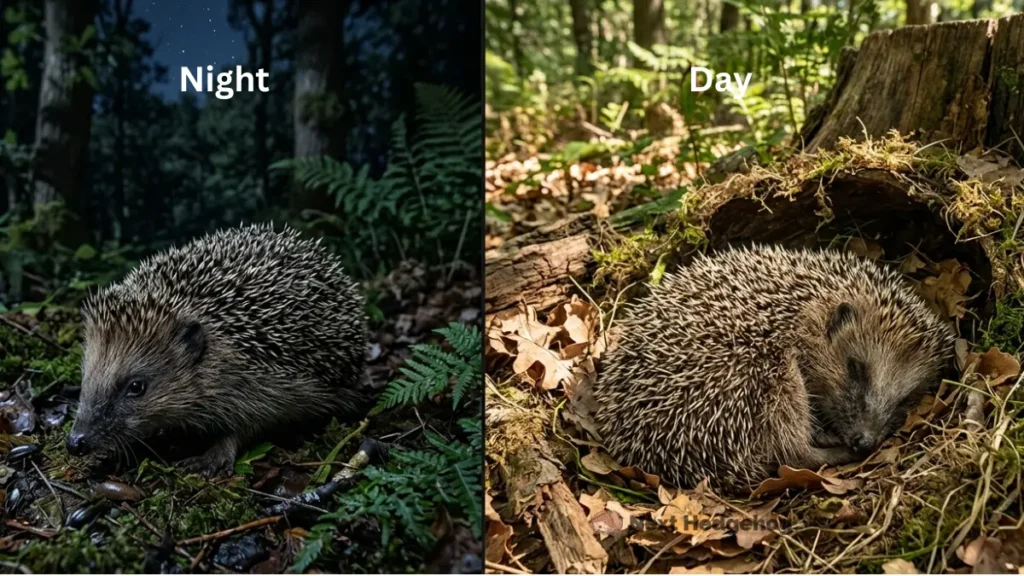
Hedgehogs follow a clear daily rhythm where their behavior changes drastically between day and night. They are naturally built for nighttime activity, while daytime is mainly reserved for rest and recovery. Understanding this contrast helps explain how they survive and function in different environments.
| Aspect | Daytime Behavior | Nighttime Behavior |
|---|---|---|
| Activity Level | Mostly inactive and resting | Highly active and energetic |
| Sleep Pattern | Sleep in nests, burrows, or hidden spots | Rarely sleep, spend time moving and exploring |
| Food Searching | Do not forage or hunt | Actively hunt insects, worms, and small invertebrates |
| Safety Behavior | Stay hidden and curled up for protection | Move carefully while staying alert to threats |
| Sensory Use | Minimal use of senses while resting | Strong reliance on smell and hearing for survival |
| Movement | Very little or no movement | Travel long distances while exploring territory |
| Environmental Preference | Prefer dark, sheltered sleeping areas | Prefer quiet outdoor spaces for foraging |
| Energy Use | Low energy conservation mode | High energy activity for feeding and exploration |
How Hedgehogs Hunt and Forage After Dark
Hedgehogs are patient and methodical nighttime hunters. After sunset they leave their nests and begin slowly exploring their surroundings in search of food. Their hunting style depends heavily on senses like smell and hearing rather than speed or vision.
- Slow and careful movement while searching for food: Hedgehogs move quietly through grass, soil, and leaf litter, taking their time to detect hidden insects without alerting predators or disturbing their surroundings.
- Strong sense of smell to locate prey: They rely heavily on smell to find worms, beetles, and other insects even when they are buried underground or hidden under debris.
- Listening for movement in the environment: Their hearing helps them pick up small sounds like rustling insects or movement in the soil, guiding them toward potential food sources.
- Digging to uncover hidden insects: Hedgehogs use their snout and claws to gently dig into soil, leaves, or rotting wood to reach insects that are not visible on the surface.
- Using touch and vibration awareness: In low light conditions, they depend on touch and ground vibrations to sense nearby prey and navigate safely.
- Following familiar nighttime routes: Many hedgehogs reuse the same paths each night, which helps them efficiently locate known food-rich areas.
- Eating a variety of insects and small creatures: Their diet includes beetles, caterpillars, worms, and other small invertebrates that are easier to find at night.
- Careful behavior to avoid danger while feeding: They frequently stop and stay alert while foraging to ensure no predators are nearby before continuing to eat.
Do Pet Hedgehogs Stay Nocturnal in Captivity?
Pet hedgehogs usually remain nocturnal even when they are kept in captivity. Their internal biological clock is naturally set to be active at night, so they still prefer to sleep during the day and wake up in the evening. This behavior is deeply rooted in their instincts and does not change easily just because their environment is different.
In a home setting, pet hedgehogs often become active after sunset. They may start exploring their cage, running on wheels, or searching for food once it gets dark and quiet. Even if their owner tries to interact with them during the day, most hedgehogs will remain sleepy and less responsive because that is their natural rest period.
However, some pet hedgehogs can slightly adjust their routine based on human interaction and feeding schedules. With consistent handling, they may become a bit more active in the evening or early night when their owners are available. Still, they rarely become fully diurnal, and their core nocturnal nature usually stays the same throughout their life.
Common Misconceptions About Hedgehog Nocturnal Behavior

Hedgehog behavior is often misunderstood, especially when it comes to their nighttime activity. Many people assume things that are not accurate simply because they compare hedgehogs to more familiar pets. Clearing up these misconceptions helps in understanding their true natural habits.
- Some people believe hedgehogs are active during the day but they are actually mainly night active animals.
- It is often assumed that hedgehogs are lazy because they sleep a lot but this is part of their natural rest cycle.
- Many think pet hedgehogs should adapt fully to human daytime routines but their biological clock usually stays nocturnal.
- Some assume hedgehogs hunt like fast predators but they actually move slowly and rely on careful foraging.
- It is commonly believed that hedgehogs need constant interaction but they are naturally solitary and prefer quiet time.
- People often think hedgehogs are blind in daylight but they can see they simply rely more on smell and hearing with better night eyesight.
- There is a misconception that changing their schedule is easy but altering their natural rhythm can cause stress.
- Some assume all hedgehogs behave exactly the same but activity levels can vary based on environment and health.
What Hedgehogs Do During the Day?
During the day hedgehogs are mostly inactive and spend their time resting. They are nocturnal animals so daylight hours are usually reserved for sleep. You will often find them curled up tightly in a safe hidden place like a nest burrow or dense vegetation.
This helps them stay protected from predators and avoid unnecessary disturbance while their body recovers energy for nighttime activity.
While sleeping hedgehogs enter a calm low energy state. Their breathing slows and they remain very still for long periods.
This deep rest is important because they spend a lot of energy during the night searching for food and moving across large areas. Without proper daytime rest they would not be able to survive or stay healthy.
In some cases hedgehogs may briefly wake during the day if they feel disturbed by noise temperature changes or handling.
However they usually return to sleep quickly. Their natural instinct is to remain hidden and inactive until evening arrives when they become active again.
How to Care for a Nocturnal Hedgehog as a Pet Owner
Caring for a nocturnal hedgehog means working with its natural rhythm instead of against it. These small animals are built to sleep through the day and become active after sunset, so their environment and daily care should support that cycle.
When their routine is respected, they tend to stay healthier, calmer, and more comfortable in captivity.
Provide a quiet and undisturbed daytime environment
Hedgehogs need long, uninterrupted sleep during the day to recover from their active nights. Their enclosure should be placed in a low noise area away from direct sunlight, television sound, or frequent human movement. Bright light and constant disturbance can cause stress and lead to irregular behavior or poor health over time.
Respect their natural nighttime activity
Most hedgehogs begin waking up in the evening and become fully active at night. This is the best time for them to explore, exercise, and interact. Owners should plan bonding time and supervision during these hours rather than trying to engage them during the day when they are naturally resting.
Maintain a consistent feeding routine
Feeding should be done in the evening or early night when hedgehogs naturally wake up. A consistent schedule helps regulate their internal clock and supports healthy digestion. Sudden changes in feeding time can confuse their rhythm and affect their activity patterns.
Create a safe and enriched enclosure
A proper hedgehog habitat should include hiding spots, soft bedding, and enough space to move comfortably. Exercise wheels are very important because hedgehogs are active runners at night. A safe enclosure encourages natural behavior and prevents boredom or stress-related issues.
Handle them only when they are awake
Hedgehogs should never be forced awake for interaction during the day. Handling should happen during their active nighttime hours when they are alert and less likely to feel threatened. Gentle and patient handling builds trust over time and reduces defensive behaviors like curling up or hissing.
Watch for changes in behavior or sleep patterns
Healthy hedgehogs usually follow a consistent sleep and activity cycle. If you notice sudden changes like excessive sleeping, loss of appetite, or unusual daytime activity, it may indicate stress or illness. Early observation and timely care are important for maintaining their well-being.
FAQs and Answers
Are hedgehogs fully nocturnal or just active at night?
Hedgehogs are primarily nocturnal animals. This means they are most active at night and sleep during the day. While some individuals may show slight flexibility in captivity, their natural behavior is strongly night based.
Why does my hedgehog sleep all day?
Sleeping all day is normal for hedgehogs because their bodies are adapted for nighttime activity. They rest during daylight hours to recover energy and prepare for their active night routine.
Can I wake my hedgehog during the day?
It is not recommended to wake a hedgehog during the day. Doing so can cause stress and make them feel threatened. It is better to interact with them in the evening or at night.
Do pet hedgehogs change their sleep schedule over time?
Most pet hedgehogs do not fully change their nocturnal schedule. They may slightly adjust based on their environment and feeding routine, but they usually remain night active.
How many hours do hedgehogs sleep per day?
Hedgehogs typically sleep around 12 to 18 hours a day. The exact amount can vary depending on age, health, and environmental conditions.
Are hedgehogs active every night?
Most healthy hedgehogs are active almost every night. However, their activity level can vary depending on temperature, diet, and overall well-being.