Can Hedgehogs Eat Chocolate? Is It 100% Toxic to Them?
No—hedgehogs should never eat chocolate, as it is toxic and potentially life-threatening for them.
If you’re caring for a hedgehog or simply curious about their diet, this is one of those foods that falls firmly into the “absolutely avoid” category. Chocolate contains compounds like theobromine and caffeine, which a hedgehog’s small body cannot safely process.
Even a tiny amount can lead to serious health issues, from digestive distress to heart problems.
But here’s where things get interesting: many new hedgehog owners assume that because hedgehogs enjoy sweet-smelling treats or insects with natural sugars, chocolate might be a harmless indulgence. That assumption can be dangerous.
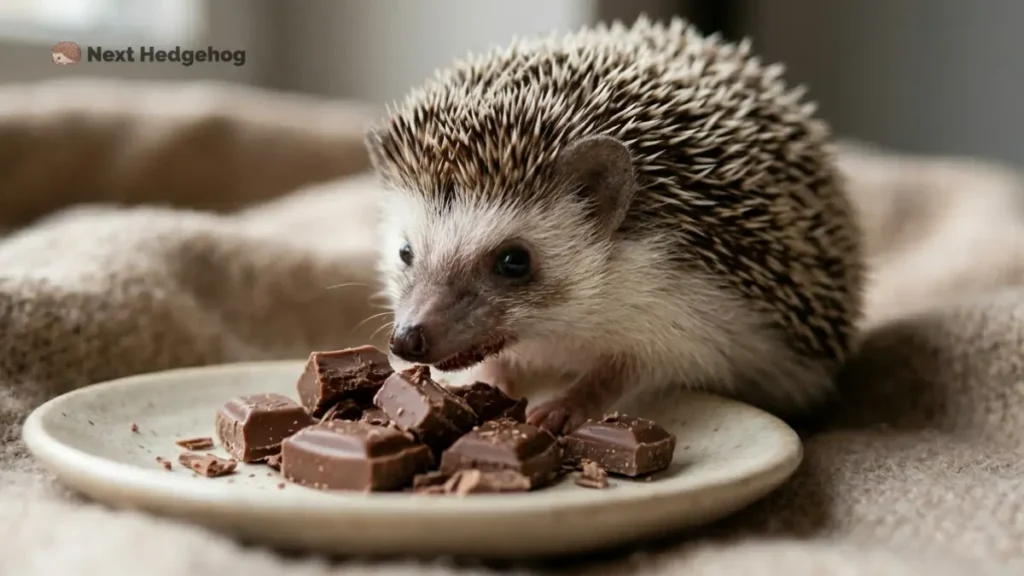
Understanding why chocolate is harmful—and what safe alternatives exist—doesn’t just protect your pet; it helps you build a diet that supports their long-term health and natural behavior.
In this guide, we’ll break down exactly why chocolate is toxic to hedgehogs, what symptoms to watch for if accidental ingestion happens, and which treats you can safely offer instead.
What is Chocolate?
Chocolate is a sweet food product made from the seeds of the cacao tree, known scientifically as Theobroma cacao. These seeds—called cacao beans—are harvested, fermented, dried, roasted, and then processed to create cocoa solids and cocoa butter, the main ingredients in chocolate.

At its core, chocolate is a blend of cocoa solids (which give it flavor), cocoa butter (which provides texture), and often sugar and milk. Depending on how it’s processed, chocolate comes in several forms, such as dark chocolate, milk chocolate, and white chocolate—each with different levels of cocoa content.
What makes chocolate especially important to understand in the context of hedgehogs is that it naturally contains compounds like theobromine and caffeine. While these are harmless (and even enjoyable) for humans, they are toxic to many small animals, including hedgehogs.
Different Types of Chocolate
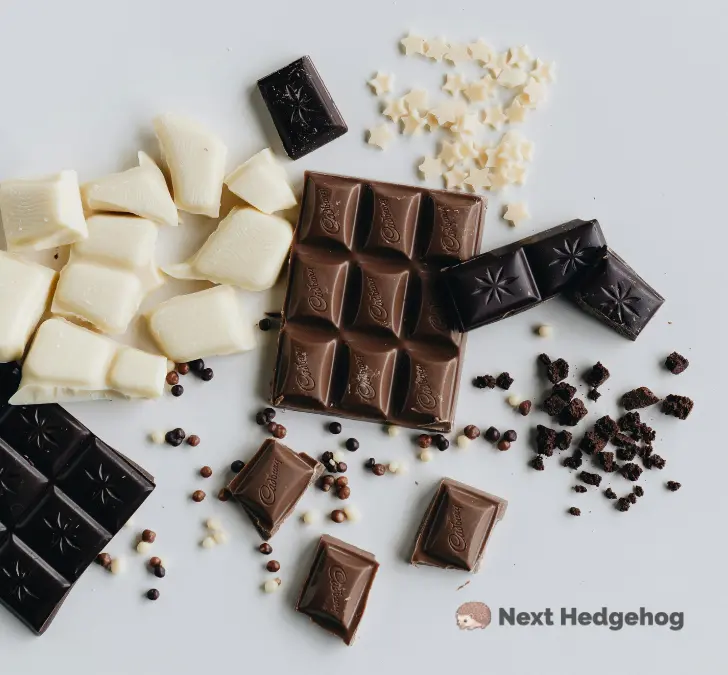
Chocolate comes in several varieties, each with a different composition of cocoa solids, cocoa butter, sugar, and sometimes milk. These differences affect not only taste and texture but also how dangerous each type can be for animals like hedgehogs.
Understanding these types helps you better identify what to avoid completely.
Dark Chocolate
Dark chocolate contains a high percentage of cocoa solids and very little to no milk. It’s rich, slightly bitter, and considered the most “pure” form of chocolate.
Because of its high cocoa content, it also has the highest levels of theobromine and caffeine making it the most toxic and dangerous type for hedgehogs. Even a small amount can cause serious health issues.
Milk Chocolate
Milk chocolate is made by combining cocoa solids with milk powder or condensed milk, along with sugar. It has a sweeter, creamier taste and a lower cocoa content compared to dark chocolate.
While it contains less theobromine than dark chocolate, it is still unsafe for hedgehogs and should never be offered as a treat.
White Chocolate
White chocolate is quite different from the others because it doesn’t contain cocoa solids—only cocoa butter, sugar, and milk. This means it has very little theobromine.
However, it’s still not safe for hedgehogs due to its high sugar and fat content, which can lead to obesity, digestive problems, and other health issues.
Unsweetened (Baking) Chocolate
Unsweetened chocolate, often used in baking, is made almost entirely of cocoa solids with no added sugar. It is extremely bitter and contains very high concentrations of theobromine.
This makes it one of the most toxic forms of chocolate for hedgehogs, posing a serious risk even in tiny quantities.
Cocoa Powder
Cocoa powder is produced by removing most of the cocoa butter from chocolate liquor and grinding the remaining solids into a fine powder.
It has a very high concentration of theobromine, making it just as dangerous if not more so than dark chocolate. It should be kept far away from hedgehogs at all times.
Is Chocolate Toxic for Hedgehogs?
Yes—chocolate is highly toxic to hedgehogs and should never be given under any circumstances.
The danger comes from naturally occurring compounds in chocolate, mainly theobromine and caffeine. Hedgehogs, like many small animals, cannot efficiently metabolize these substances and other related toxic foods. As a result, even a small amount can build up in their system and quickly lead to poisoning.
The severity of toxicity depends on the type of chocolate and the amount consumed. Dark chocolate and cocoa powder are especially dangerous because they contain higher concentrations of theobromine, while milk chocolate still poses a real risk despite being less concentrated.
Even white chocolate, though lower in these compounds, is unsafe due to its high sugar and fat content, which can cause digestive upset and long-term health problems.
If a hedgehog eats chocolate, symptoms can appear within hours. These may include restlessness, increased heart rate, tremors, vomiting, diarrhea, and in severe cases, seizures or even death. Because hedgehogs are so small, it takes very little chocolate to cause serious harm.
Ingredients Included in Chocolate
Chocolate may seem like a simple treat, but it’s actually made up of several ingredients—each playing a role in its taste, texture, and, unfortunately, its potential harm to hedgehogs. Some of these components, especially the natural stimulants found in cocoa, are what make chocolate unsafe for small animals.
Here’s a breakdown of the common ingredients found in chocolate and why they matter:
| Ingredient | What It Does in Chocolate | Typical Presence (%) | Why It’s Unsafe for Hedgehogs |
|---|---|---|---|
| Cocoa Solids | Provides rich flavor and color | 10% – 90% | Contains theobromine & caffeine (toxic) |
| Cocoa Butter | Adds smooth texture and melt-in-mouth feel | 20% – 30% | High fat content can cause obesity & digestive issues |
| Sugar | Sweetens the chocolate | 20% – 60% | Leads to weight gain, dental problems, and gut issues |
| Milk Powder | Adds creaminess (in milk/white chocolate) | 10% – 25% | Hedgehogs are often lactose intolerant |
| Theobromine | Natural stimulant found in cocoa | Varies (higher in dark chocolate) | Highly toxic; affects heart and nervous system |
| Caffeine | Another natural stimulant | Small amounts | Causes hyperactivity, heart issues, and toxicity |
| Emulsifiers (e.g., soy lecithin) | Improves texture and shelf life | <1% | Not directly toxic but unnecessary and unnatural for hedgehogs |
| Flavorings (e.g., vanilla) | Enhances taste | Trace amounts | Can irritate digestion in sensitive animals |
Why Chocolate Is Not Safe for Hedgehogs?
Chocolate might seem harmless from a human perspective, but for hedgehogs, it poses multiple health risks that can quickly become serious. Their small size and sensitive digestive system make them especially vulnerable to certain compounds found in chocolate.
Here are the main reasons why chocolate is not safe for hedgehogs:
- High Theobromine Content: Chocolate—especially dark and unsweetened varieties—contains theobromine, a stimulant that hedgehogs cannot properly metabolize. It can build up in their system and lead to poisoning, affecting the heart and nervous system.
- Presence of Caffeine: Along with theobromine, chocolate also contains caffeine. Even in small amounts, it can cause hyperactivity, increased heart rate, tremors, and stress in hedgehogs.
- Toxicity Risk Even in Small Quantities: Hedgehogs are tiny animals, so it takes very little chocolate to cause harm. A small bite that seems insignificant to us can be dangerous—or even fatal—for them.
- High Sugar Content: Most chocolate products are loaded with sugar, which can lead to obesity, dental problems, and long-term metabolic issues in hedgehogs.
- Excess Fat Levels: Chocolate contains cocoa butter, which is high in fat. This can cause digestive upset, weight gain, and increase the risk of fatty liver disease over time.
- Lactose Intolerance Issues: Milk chocolate and white chocolate contain dairy, and many hedgehogs are lactose intolerant. This can lead to diarrhea, bloating, and stomach discomfort.
- Artificial Additives and Flavorings: Ingredients like emulsifiers, preservatives, and flavorings are unnecessary and may irritate a hedgehog’s digestive system or cause mild toxicity.
What Happens If a Hedgehog Eats Chocolate?
If a hedgehog eats chocolate, the effects can range from mild discomfort to severe, life-threatening poisoning—depending on the type of chocolate and the amount consumed.
Because their bodies can’t process certain compounds properly, symptoms can appear quickly and escalate fast.
- Digestive Upset: Early signs often include vomiting, diarrhea, loss of appetite, or general discomfort as the body reacts to chocolate.
- Hyperactivity & Restlessness: The stimulants in chocolate can make a hedgehog unusually active, anxious, or unable to relax.
- Rapid Heart Rate: Chocolate can overstimulate the cardiovascular system, leading to an increased or irregular heartbeat.
- Tremors & Muscle Shaking: As toxicity builds, you may notice shaking, twitching, or lack of coordination—clear signs the nervous system is affected.
- Seizures: In more severe cases, hedgehogs may experience seizures, which is a medical emergency requiring immediate veterinary care.
- Risk of Death: Without prompt treatment, chocolate poisoning can become fatal, especially if a large amount was consumed.
Why Hedgehogs Cannot Digest Chocolate Properly?
Hedgehogs have a very different metabolism compared to humans, which makes certain foods—like chocolate—extremely difficult for their bodies to process. What seems harmless to us can quickly become toxic to them due to how their system handles specific compounds.
Here’s why hedgehogs cannot digest chocolate properly:
- Slow Metabolism of Theobromine: Hedgehogs lack the ability to efficiently break down theobromine, a primary compound in chocolate. Instead of being processed and eliminated, it builds up in their system, leading to toxicity.
- Sensitivity to Caffeine: Even small amounts of caffeine can overstimulate a hedgehog’s nervous system. Their bodies are not designed to handle stimulants, making them highly sensitive to its effects.
- Small Body Size, Higher Impact: Because hedgehogs are tiny animals, even a small كمية (amount) of chocolate results in a much higher concentration of toxins in their body compared to larger animals.
- Limited Liver Detox Capacity: A hedgehog’s liver is not equipped to detoxify complex compounds like those found in chocolate efficiently. This slows down toxin removal and increases the risk of poisoning.
- Digestive System Designed for Insects: Hedgehogs are primarily insectivores, meaning their digestive system is adapted for protein-rich, low-sugar foods. Chocolate—high in sugar and fat—doesn’t align with their natural diet and can disrupt digestion.
- Lactose Intolerance (in Some Types of Chocolate): Milk chocolate and white chocolate contain dairy, which many hedgehogs cannot digest properly, leading to bloating, diarrhea, and stomach discomfort.
Common Myths About Hedgehogs Eating Chocolate
There are many misconceptions online about what hedgehogs can and can’t eat, and chocolate is one of the most misunderstood foods. These myths can be risky, especially for new owners who are still learning about proper hedgehog care.
- “A small bite of chocolate won’t hurt”: This is one of the most dangerous myths. Even a tiny amount can be harmful because hedgehogs are very small and highly sensitive to theobromine. There is no safe quantity.
- “White chocolate is safe because it has no cocoa”: While white chocolate contains little to no theobromine, it’s still loaded with sugar and fat. It can cause digestive issues, obesity, and other health problems—so it’s not safe either.
- “Hedgehogs can eat anything humans eat”: Hedgehogs have completely different dietary needs. Foods that are harmless to humans—like chocolate—can be toxic to them due to differences in metabolism.
- “My hedgehog likes chocolate, so it must be okay”: Animals don’t always know what’s safe for them. Just because a hedgehog shows interest in chocolate doesn’t mean it’s suitable or safe to eat.
- “Chocolate is only dangerous in large amounts”: Due to their small size, even a small كمية of chocolate can lead to serious health issues. Toxicity depends on concentration, not just portion size.
- “Natural or organic chocolate is safer”: Whether chocolate is organic or processed doesn’t change the presence of theobromine and caffeine. These compounds are naturally occurring and still toxic to hedgehogs.
Foods That Are Similar to Chocolate but Safe
If you’re looking for treats that feel similar to chocolate but are actually safe for hedgehogs, the key is to focus on options that mimic the texture or “treat-like” experience—without the harmful ingredients.
While there’s no true chocolate substitute for hedgehogs, a few safe alternatives can satisfy curiosity without risking their health.
- Carob (Chocolate Alternative): Carob is often used as a pet-safe substitute for chocolate because it doesn’t contain theobromine or caffeine. In very small, specially formulated pet-safe forms (like carob treats made for animals), it can be a safer option—but only occasionally and in tiny amounts.
- Unsweetened Apples (Soft & Slightly Sweet): Small pieces of apple (without seeds) provide a mild sweetness and soft texture that can feel like a “treat” without the dangers of chocolate.
- Banana Slices (Creamy Texture): Bananas offer a naturally soft, slightly creamy consistency that mimics the indulgent feel of chocolate, while being safe in moderation.
- Cooked Sweet Potato (Soft & Rich): Plain, cooked sweet potato has a smooth texture and subtle sweetness, making it a great safe alternative to processed treats.
- Hedgehog-Safe Commercial Treats: Specially made hedgehog treats (often insect-based) can deliver a “reward” experience similar to giving a treat like chocolate—without any harmful ingredients.