Can Hedgehogs Eat Meat? Truth, Risks & Feeding Guide 2026
Yes, hedgehogs can eat meat, and animal protein is an important part of their diet.
Hedgehogs are natural insect eaters, but their bodies are built to handle protein from animal sources as well. In the wild, this mainly comes from insects and small invertebrates, though they may also consume small bits of meat when they find it.
Protein is essential for their muscle strength, energy levels, and overall body function. Without enough of it, they can become weak or unhealthy over time.
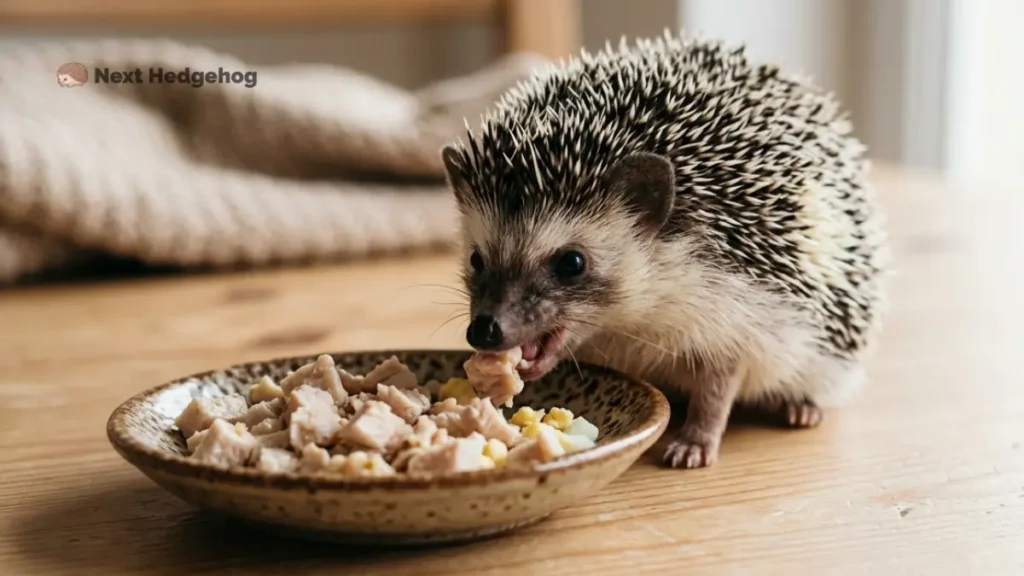
For captive hedgehogs, meat can sometimes be included in small amounts, but it needs to be simple, plain, and easy to digest, since their system is not designed for heavily processed or seasoned foods.
What is Meat?
Meat is the edible flesh of animals that is commonly used as food by humans and other animals.
It usually comes from animals like chicken, beef, lamb, pork, and fish. Meat is considered a rich source of animal protein, which helps in building and repairing body tissues. It also contains fats, vitamins, and minerals that support energy and overall body functions.
Because of its high nutritional value, meat is often included as a major part of diets in many parts of the world. Different types of meat vary in texture, taste, and nutrient content, but all of them mainly serve as a concentrated source of protein and energy.
Meats that Hedgehogs Can Eat
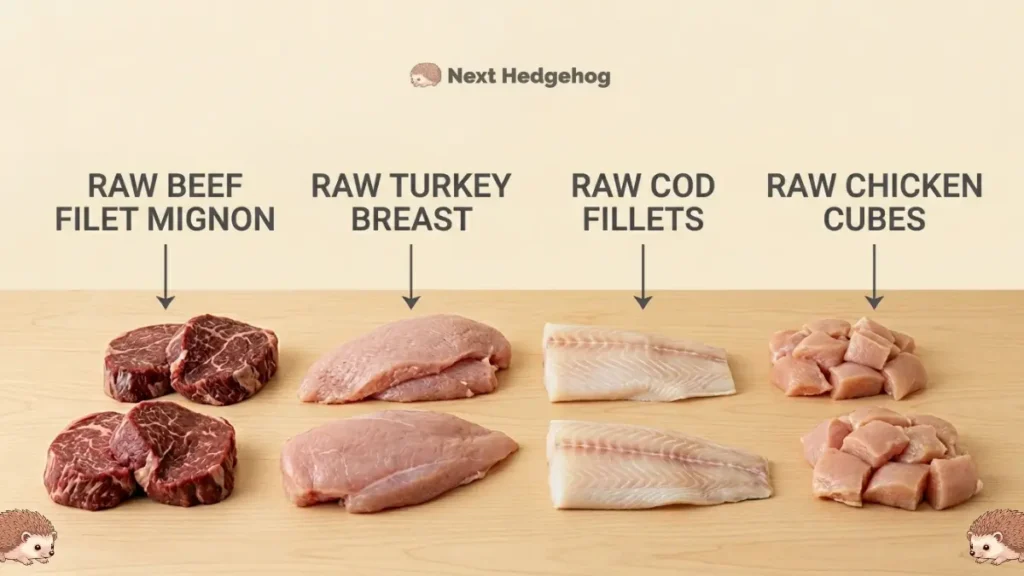
Hedgehogs can eat a few types of plain, cooked meats in small amounts as an occasional protein source. The key is to keep it simple, unseasoned, and safe, since their digestive system is sensitive and not made for processed or spicy foods.
- Chicken: Cooked, plain chicken is one of the safest meat options. It should be boiled or baked without salt, oil, or spices. Small shredded pieces are easy for hedgehogs to eat and digest.
- Turkey: Turkey is another lean meat that can be given occasionally. Like chicken, it must be fully cooked and unseasoned. It’s a good protein option when offered in tiny portions.
- Beef: Cooked lean beef can be offered in very small amounts. It is heavier than poultry, so it should be given less often and in soft, finely chopped pieces.
- Fish: Plain cooked fish like salmon or white fish can be included sometimes. It should be fully cooked, boneless, and free from oil or seasoning.
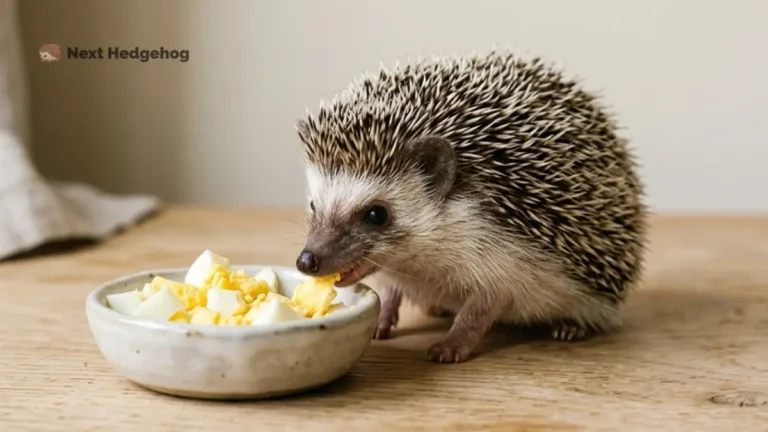
- Egg (as an animal protein alternative): Though not meat, boiled egg is often included in this category. It provides high-quality protein and can be given in small, mashed portions occasionally.
Is Meat Safe for Hedgehogs?
Meat can be safe for hedgehogs when it is given in the right form and in small amounts. Plain, cooked, and unseasoned meat is generally easier for them to digest and can provide useful animal protein.
However, not all meat is suitable. Processed meats like sausages, deli slices, or anything with salt, spices, or preservatives can be harmful. Raw meat is also risky because of bacteria that can affect their health. Even safe meats like chicken or turkey should only be given occasionally, not as a regular diet.
Overall, meat is safe only as a small supplement, not a main food. A balanced diet is more important, and overfeeding meat can lead to digestive issues or weight problems over time.
Nutritional Value of Meat
Meat is a nutrient-dense food that provides several essential elements needed for growth, energy, and overall body function. It is especially known for its high protein content, but it also contains fats, vitamins, and minerals in varying amounts depending on the type of meat.
Here’s a simple breakdown of the main nutrients found in common meats:
| Nutrient | What It Does | Found In Meat |
|---|---|---|
| Protein | Builds and repairs muscles and tissues | Chicken, beef, turkey, fish |
| Fat | Provides energy and supports body functions | Beef, lamb, some fish |
| Iron | Helps in blood production and oxygen flow | Red meats like beef and lamb |
| Vitamin B12 | Supports nerve health and energy | All animal meats |
| Zinc | Boosts immunity and healing | Poultry and red meat |
Benefits of Feeding Meat to Hedgehogs
Feeding small amounts of meat to hedgehogs can provide several nutritional benefits when it is done correctly. Since meat is rich in animal protein, it can support their natural dietary needs in a simple and effective way.
- Supports muscle growth and repair: Protein from meat helps maintain strong muscles and supports tissue repair, especially in growing or active hedgehogs.
- Provides natural animal protein: Meat offers a protein source similar to what hedgehogs get from insects in the wild, making it a suitable occasional supplement.
- Boosts energy levels: The fats and proteins in meat can help provide steady energy for daily activity and movement.
- Improves overall nutrition balance: When used in small amounts, meat can add variety to their diet and help fill minor nutritional gaps.
- Helps in recovery during weakness or stress: Easily digestible, plain meat can support recovery when a hedgehog is low on strength or appetite.
Risks Factors of Overfeeding Meat
Overfeeding meat to hedgehogs can lead to several health problems. While small amounts are fine, too much can easily upset their natural diet balance and affect their digestion and overall well-being.
- Digestive problems: Too much meat can be hard to digest and may cause diarrhea, bloating, or stomach discomfort.
- Weight gain and obesity: Excess fat and protein intake can lead to unhealthy weight gain, which puts stress on their small body.
- Nutritional imbalance: Relying heavily on meat can reduce intake of other important foods, leading to missing nutrients.
- Kidney strain: High protein levels over time may put extra pressure on the kidneys and affect long-term health.
- Loss of dietary variety: Overfeeding meat can make hedgehogs less interested in other foods they actually need for a balanced diet.
Hedgehogs Meat Feeding Guide
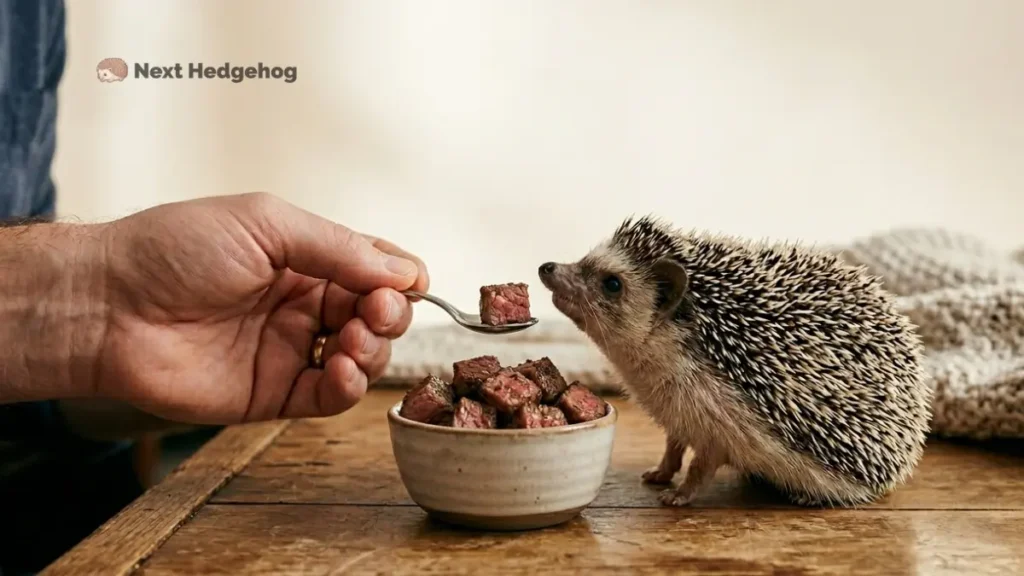
Feeding meat to hedgehogs should be done with a clear understanding of their natural diet and digestive limits. Even though meat can provide useful animal protein, the way it is prepared, portioned, and offered makes a big difference to their health.
Choose the right type of meat
Not all meats are suitable. Lean options like chicken, turkey, and some white fish are the safest choices because they are lower in fat and easier to digest.
Fatty cuts, processed meats, or anything cured or smoked should be avoided completely. These often contain salt, preservatives, or additives that can be harmful to a hedgehog’s sensitive system.
Cook it properly
Proper cooking is essential. Meat should always be fully cooked by boiling or baking without any seasoning, oil, garlic, onion, or spices.
These ingredients can be toxic or irritating for hedgehogs. Cooking also reduces the risk of bacteria such as Salmonella, which can affect their health quickly due to their small body size.
Cut into small, soft pieces
Hedgehogs have small jaws and weak chewing ability compared to larger animals. Meat should be shredded, finely chopped, or mashed depending on texture. Soft pieces reduce choking risk and make digestion smoother, especially for younger or older hedgehogs.
Control the portion size strictly
Even safe meat should be given in very small amounts. A small teaspoon-sized portion is usually more than enough. Overfeeding protein can strain the kidneys and disrupt their natural diet balance, which is designed mainly around insects rather than large meat portions.
Feed occasionally, not daily
Meat should be treated as a supplement, not a staple. In the wild, hedgehogs do not rely heavily on meat; insects make up most of their intake. Keeping meat as an occasional addition helps maintain a balanced diet and prevents nutritional dependency.
Remove uneaten food quickly
Any leftover meat should be removed within a short time after feeding. Meat spoils quickly at room temperature and can attract bacteria or insects, which can cause infections or digestive issues if consumed later.
Feeding Frequency Guidelines: By Age & Amount
Feeding meat to hedgehogs depends a lot on their age, size, and overall diet. Younger hedgehogs need slightly more protein for growth, while adults require smaller, more controlled portions to maintain balance. The key is moderation, since meat is only a supplement and not a main food source.
| Age Group | Frequency | Portion Size | Notes |
|---|---|---|---|
| Baby (4–8 weeks) | 2–3 times per week | Very small (pea-sized) | Only soft, finely mashed meat; focus should still be on milk replacer and starter foods |
| Juvenile (2–6 months) | 2 times per week | Small (½–1 teaspoon) | Lean, cooked meat only; supports growth but should not replace insects or staple diet |
| Adult (6 months–3 years) | 1–2 times per week | Small (1 teaspoon) | Maintain balance with insects and hedgehog pellets; avoid overfeeding |
| Senior (3+ years) | 1 time per week | Very small (½–1 teaspoon) | Easier-to-digest meats preferred; monitor digestion closely |
Raw vs Cooked Meat: Which is Safe?
Hedgehogs can respond very differently to raw and cooked meat, so it’s important to understand the safety and digestion differences before offering it. Even though both come from animal sources, their impact on health is not the same.
Raw meat
Raw meat is not safe for hedgehogs. It can carry bacteria like Salmonella, E. coli, and parasites that can quickly cause serious illness.
Because hedgehogs are small animals, their immune system cannot handle foodborne infections well, and even a small contaminated portion can lead to diarrhea, vomiting, or weakness.
Raw meat also spoils quickly, especially in warm conditions, increasing the risk of bacterial growth if not eaten immediately.
Cooked meat
Cooked meat is the safer choice when properly prepared. Boiling or baking removes most harmful bacteria and makes the meat easier to digest. However, it must always be served plain, without salt, spices, oil, garlic, or onion, as these can be harmful or irritating.
Lean meats like chicken or turkey are generally preferred because they are lighter and less fatty, reducing strain on digestion.
Final decision
Cooked meat is the only safe option for hedgehogs, and even then it should be given in small, occasional portions. Raw meat should be completely avoided due to high health risks.
A balanced diet that mainly includes insects or appropriate hedgehog food should always remain the priority, with meat acting only as a minor supplement.
Alternative Items You Can Offer
Hedgehogs don’t need meat all the time, and there are several safer and more suitable alternatives that can still provide good protein and nutrition. These options are often easier to digest and closer to their natural diet.
- Insects (mealworms, crickets, waxworms): These are one of the best natural food sources for hedgehogs. They are rich in protein and closely match what they eat in the wild. Mealworms and crickets are commonly used as regular treats or supplements.
- High-quality hedgehog food: Specially formulated hedgehog pellets are designed to provide balanced nutrition, including protein, fat, and fiber. They are a safer everyday option compared to meat.
- Cooked egg: Boiled or scrambled egg (without oil or seasoning) is a soft, protein-rich alternative. It is easy to digest and can be offered occasionally in small amounts.
- Cat food (high-protein, grain-free): Some high-quality wet or dry cat foods can be used as a substitute when hedgehog food is not available. It should be low in fillers and high in animal protein.
- Small portions of fruits (limited use): Fruits like apple or banana can be given very occasionally. They are not a main food but can add variety in small amounts due to their sugar content.